

Service Line Information
Our Approach to Service Line Identification
Our goal is to identify the material of every water service line in our system and provide customers with greater peace of mind. The City of Atlanta Department of Watershed Management (DWM) is committed to protecting our community and developing a comprehensive service line inventory in accordance with federal drinking water standards. This effort includes:
- Conducting physical inspections of water service lines.
- Using predictive modeling to help identify service line materials based on inspection results, plumbing records, tax records, and other available data.
While DWM has not identified any lead service lines in our system to date, this important work will help us identify service line materials and determine whether any lines require additional evaluation or replacement.
What is a Water Service Line?
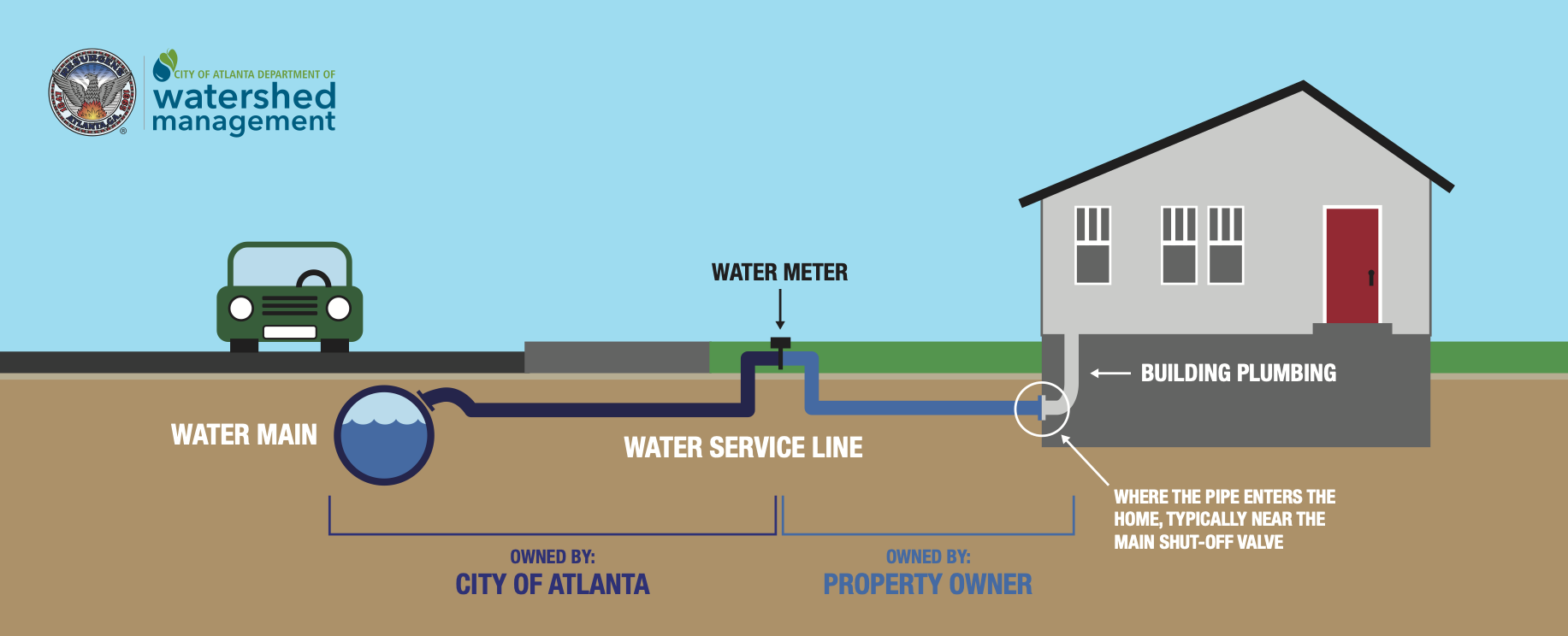
A water service line is the pipe that connects the City’s water main to your home or building. Responsibility for the service line is shared between DWM and the property owner.
DWM is responsible for the portion from the water main to the water meter, while the property owner is responsible for the portion from the water meter to the home or building.
Know Your Status
You can view our service line inventory in the Georgia Environmental Protection Division Public Transparency Dashboard.
Service Line Materials
Our inventory identifies your water service line as one of these materials listed in the table below.
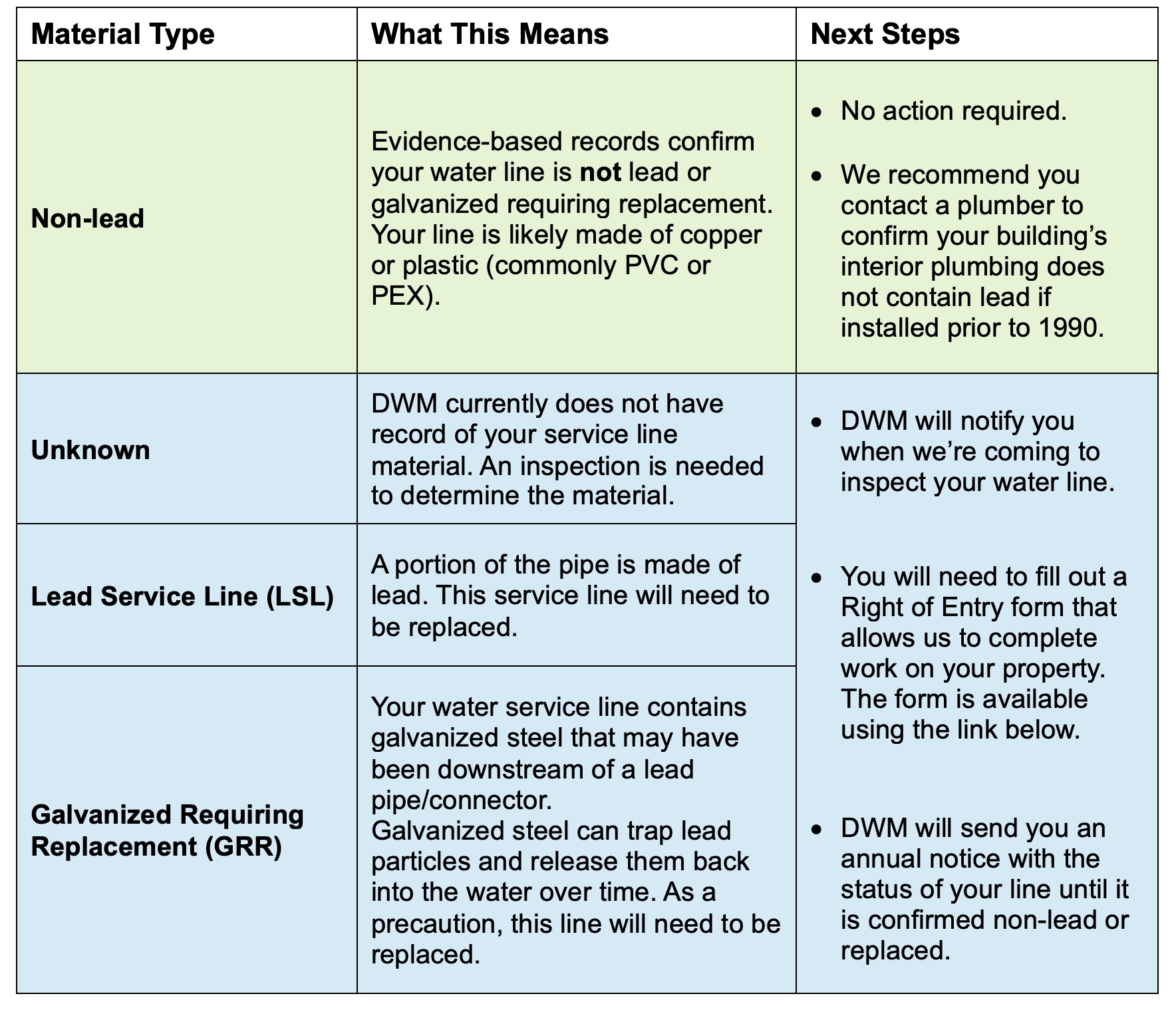
For service lines that require replacement, information about potential funding assistance will be provided to eligible customers.
Health Effects of Lead in Drinking Water
According to the Environmental Protection Agency’s (EPA) guidance, there is no safe level of lead in drinking water. Exposure to lead in drinking water can cause serious health effects in all age groups, especially pregnant people, infants (both formula-fed and breastfed), and young children.
Some potential health effects of lead exposure in infants and children include decreased IQ and attention span, as well as the development or worsening of learning and behavioral problems. The children of persons who are exposed to lead before or during pregnancy may be at increased risk of these harmful health effects.
Adults have increased risks of heart disease, high blood pressure, kidney, or nervous system problems.
Contact your health care provider for more information about your risks. Learn more about the EPA’s Lead and Copper Rule Improvements.
Reducing Your Risk
In addition to the steps DWM is taking to protect our customers, there are several actions you can take to help reduce potential exposure to lead when your water is served through lead or galvanized pipes.
- Flush your taps by running the water for 15-30 seconds before using.
- Use only cold water for drinking, cooking or preparing baby formula.
- Use water filters certified to remove lead.
- Clean your faucet screen (aerator) regularly.
Please know that even if you are served by a lead or galvanized line, it is still safe to shower or bathe, since lead exposure does not happen through skin contact.
Helpful Documents
- Frequently Asked Questions (FAQ)
- Right of Entry and Release Form
- Laboratories Certified by Georgia for Lead and Copper Monitoring
- Certification of Customer Notice: Water Service Line Material Classification
Questions?
Email us at [email protected].